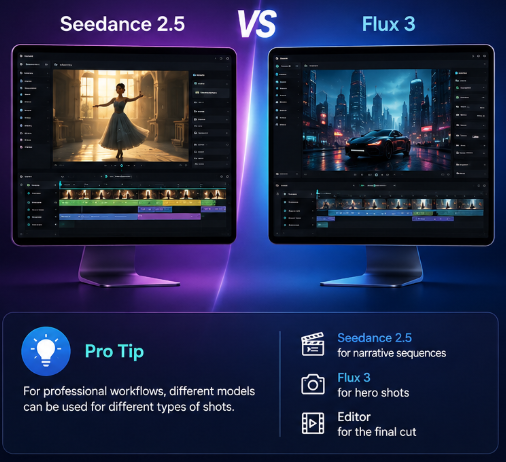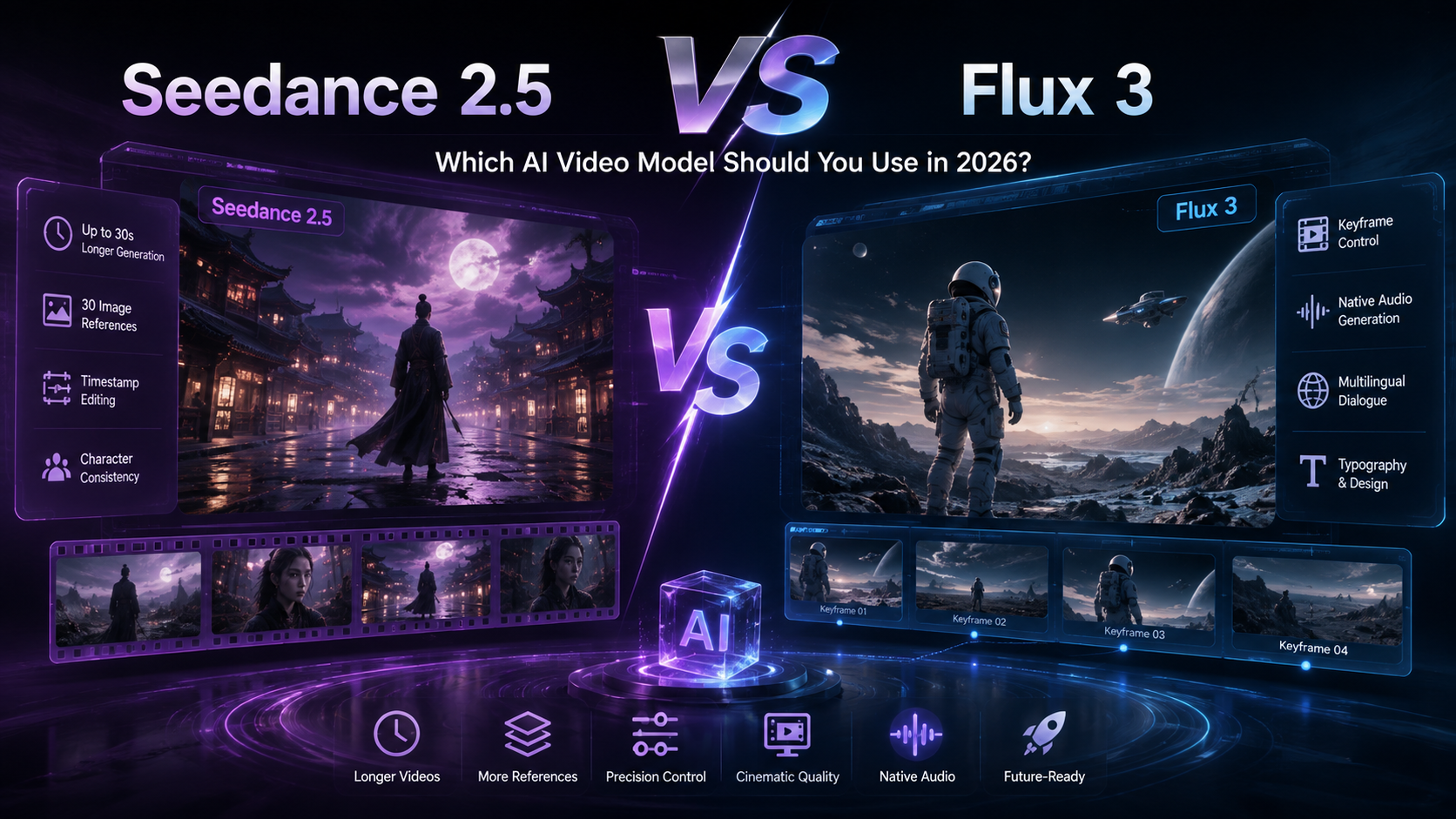
Choose for the workflow, not the headline.
Dialogue, multi-shot storytelling and one structured script adapted across several durations are central to the job.
Cinematic composition, controlled opening and closing frames, product visuals or strong results with limited prompting matter most.
- Seedance 2.5 is the practical starting point for dialogue, narrative ads and duration variants.
- FLUX 3 is the stronger test candidate for art-directed hero shots and keyframe-led motion.
- Run a small batch with your normal assets before making either model the primary production tool.
Both products remain in early access or staged rollout. Treat observed advantages as workflow signals rather than universal benchmark wins, and test representative prompts before committing a production pipeline.
What Seedance 2.5 and FLUX 3 actually are
The two systems arrived close together in summer 2026. ByteDance Seed presented Seedance 2.5 as the next step in its narrative video workflow, while Black Forest Labs introduced FLUX 3 as a shared multimodal architecture trained across image, video, audio and action prediction.
Seedance 2.5: the director workflow
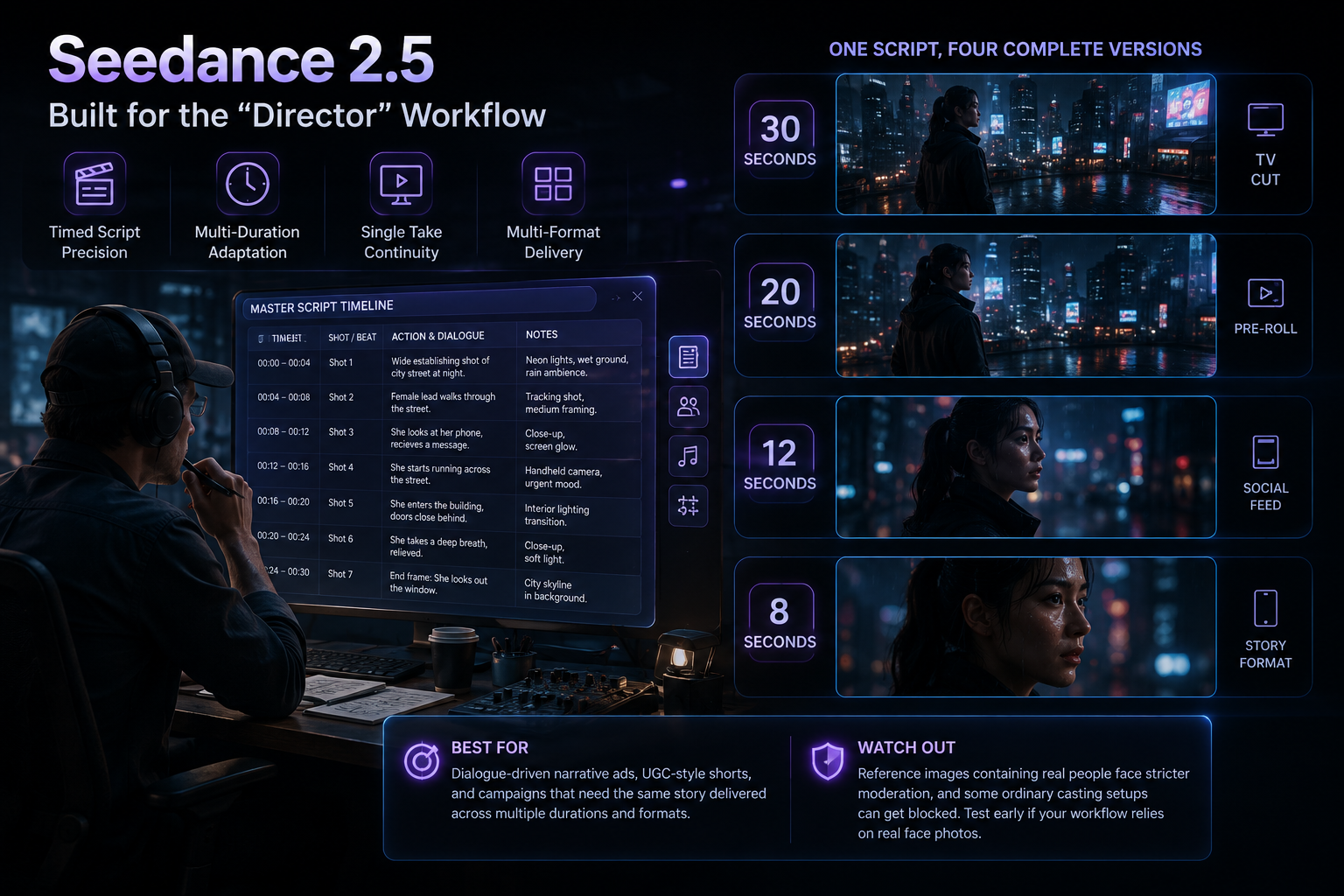
Seedance 2.5 is designed around structured direction: timecoded shot beats, transitions, delivery notes and narrative pacing. One master script can be adapted into several durations, compressing the story for a TV cut, pre-roll or paid social asset rather than simply trimming the end.
It is a practical candidate for dialogue-led advertising and UGC-style shorts. Its weak spot is stricter moderation around some real-person reference images, so teams that depend on face photography should test casting assets early.
Best for: dialogue-driven narrative ads, UGC-style shorts and campaigns that need one story delivered across several durations and formats.
FLUX 3: the art director workflow
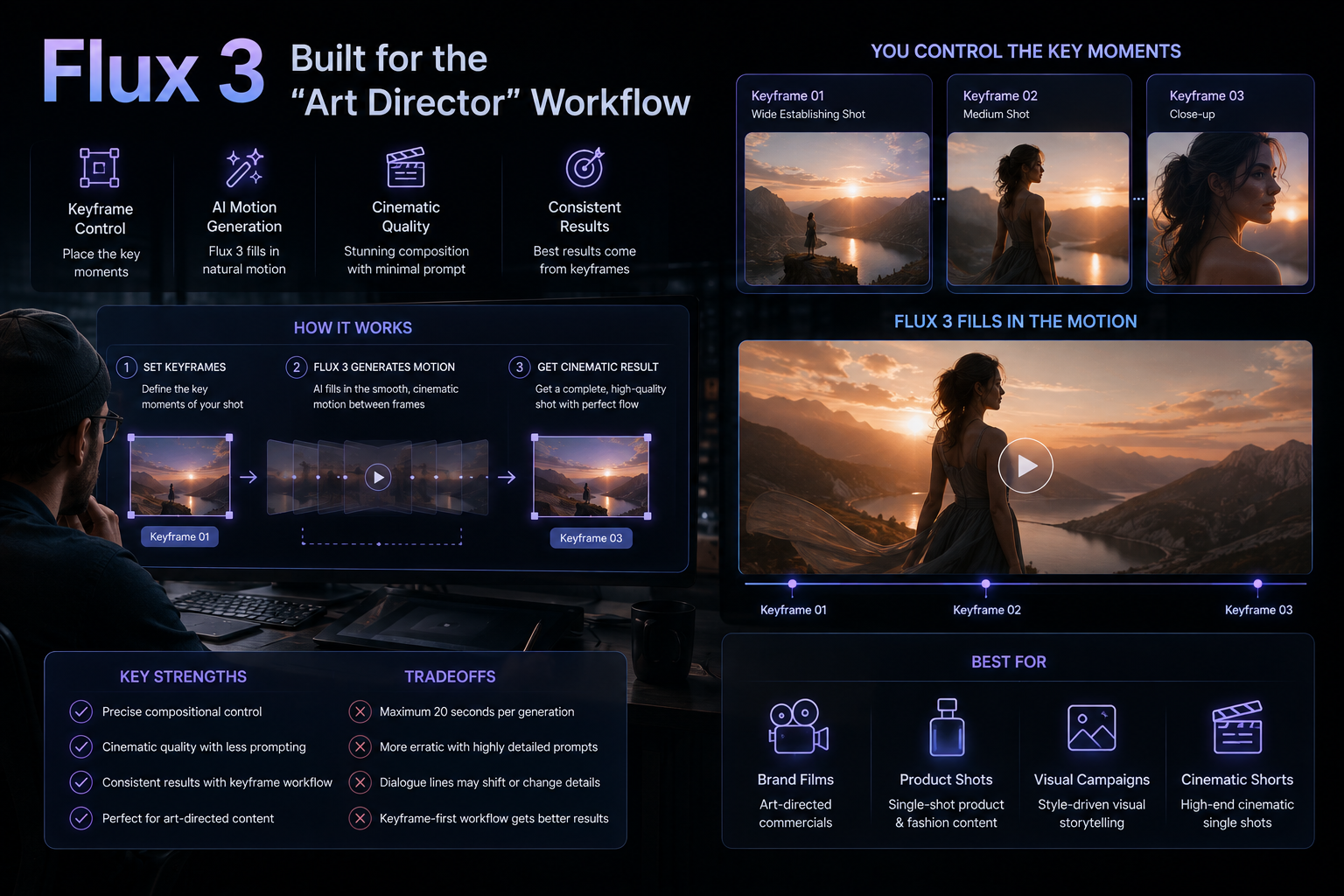
Black Forest Labs built FLUX 3 as a multimodal architecture spanning image, video and audio. Ordered keyframes let a creator define composition and the intended hero frame while the model fills in motion between visual anchors.
FLUX 3 supports clips up to 20 seconds in this interface. It can become less predictable with dense prompts and exact dialogue, so keyframe-led direction is often a better starting point than a long script containing many simultaneous requirements.
Best for: art-directed shots, brand-film visuals and single-shot product or fashion work where composition matters more than dialogue.
Core specifications compared
| Decision factor | Seedance 2.5 | FLUX 3 |
|---|---|---|
| Control style | Structured scripts, timecoded shot beats and narrative direction | Text, images, reference video and ordered keyframes |
| Single-pass duration | Up to roughly 30 seconds where supported by the provider | Up to 20 seconds with audio |
| Audio | Dialogue, sound and music in supported workflows | Optional multilingual dialogue, effects and ambience |
| Duration variants | One structured script can be compressed across supported lengths | Generate or chain clips around defined keyframes |
| Best starting point | Dialogue, UGC and multi-beat narrative | Hero shots, composition and reference-led motion |
| Access caveat | Features and prices vary by provider | Video is in early access; image rollout is separate |
Model limits change as providers update endpoints. Confirm duration, resolution, watermarking, moderation and reference support in the service you will actually use.
Seedance 2.5 vs FLUX 3 video output comparison
Spec sheets show ceilings; identical briefs reveal practical behavior. The embedded reference outputs below let you compare composition, motion, consistency, dialogue and typography using the scenarios supplied with the source article.
Cinematic product shot
A perfume bottle sits on polished black marble. The camera slowly orbits the bottle while studio light moves across the glass. Fine mist drifts in the background. Keep the bottle shape, label position and materials consistent, ending on a centered hero shot.
This shot lives or dies on composition and lighting control rather than narrative progression. FLUX 3 has a useful workflow advantage here: define the opening composition and centered closing hero shot as keyframes, then let the model fill in the orbit. With Seedance 2.5, the camera path is directed inside a structured shot brief, so compare bottle geometry, label position, reflections and whether the final frame lands exactly where requested.
Two-person dialogue
Two coworkers sit in a coffee shop. She asks, ‘Did the client approve the final version?’ He checks his phone and replies, ‘Yes, they want us to launch tomorrow morning.’ Natural expressions, eye contact, accurate dialogue timing and lip sync.
This is Seedance 2.5's natural test case. A timecoded script with word-for-word dialogue is intended to keep pacing and lip sync closer to the supplied text. FLUX 3 may drift on fine dialogue details, so a more suitable FLUX workflow is to keyframe the important expressions and conversational beats. Review exact wording, speaker separation, eye line, lip timing and natural pauses—not only visual polish.
On-screen typography
A coffee brand product tin sits on a light wood counter. The camera pushes in toward the front of the tin. A white sans-serif tagline reading ‘ROASTED DAILY’ fades in with crisp, undistorted letterforms. Warm light and a soft-focus background.
On-screen text is a demanding consistency test because malformed letters can appear for only a few frames. FLUX 3's shared multimodal direction across image, video and typography is relevant to this workflow, but it is not a guarantee of perfect spelling. Check ROASTED DAILY frame by frame for crisp letterforms, correct order, stable placement and distortion during the camera push-in.
Seedance 2.5 vs FLUX 3 pricing
Model-provider pricing and this website's credit pricing are not interchangeable. Seedance 2.5 costs depend on the provider and API workflow. The figures below apply only to this platform's own credit-based service and are not official Black Forest Labs API prices.
15 credits × 5 seconds
15 credits × 10 seconds
25 credits × 5 seconds
How far does a credit pack go?
The $9.90 Starter pack contains 200 credits, enough for two complete five-second 720p generations with 50 credits remaining. The $29.90 Creator pack contains 650 credits and lowers the effective cost of a five-second 720p clip to roughly $3.45 when every generation is usable.
Which model is cheaper?
There is no universal winner because Seedance 2.5 pricing changes by provider. FLUX 3 Studio uses one-time packs with no recurring subscription or auto-renewal. The meaningful comparison is cost per usable result: divide total generation spend by the number of outputs that pass review. A low unit price becomes expensive when many retries are needed.
Which model fits each use case?

Advertising
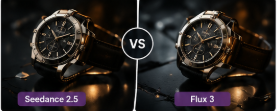
Seedance for narrative ads; FLUX for hero shotsIf the advertisement includes actors, dialogue, multiple beats or several scenes, Seedance 2.5 is the more practical starting point. If the goal is a polished product shot—perfume, watches, fashion, cars, cosmetics or luxury materials—FLUX 3 is worth testing first.
Filmmaking
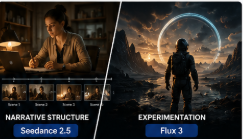
Seedance for narrative; FLUX for experimentationSeedance 2.5 is better aligned with sequences where events must happen in a particular order. FLUX 3 is more interesting when filmmakers want to explore art-directed shots and a multimodal approach to visual and audio generation.
UGC and social media
Seedance 2.5UGC frequently depends on talking characters, product demonstrations, reactions, dialogue and clear story progression. Those requirements favor a model that responds well to structured narrative prompts.

Product videos
Test FLUX 3 first, then compare bothProduct work depends on composition, material appearance, camera motion and object consistency. Run the same approved pack shot through both models and compare usable outputs.
Multimodal experimentation
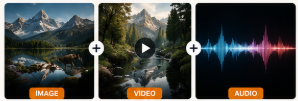
FLUX 3This is FLUX 3's clearest architectural distinction. It learns across images, video and audio together rather than treating each medium as an isolated generation task, making it especially relevant for reference-driven experiments and emerging multimodal workflows.
Pros and cons
Seedance 2.5
Strengths- Structured storytelling and multi-beat sequences
- Dialogue-driven and UGC-style content
- One narrative adapted across multiple durations
- Prompt-led camera and performance direction
- More established production access
- Reference-image moderation can block some casting workflows
- Provider-dependent prices and limits
- Not every project benefits from narrative-first control
FLUX 3
Strengths- Unified multimodal image, video and audio direction
- Cinematic and art-directed composition
- Keyframes and reference-led creation
- Product and hero-shot experimentation
- Promising visual typography workflow
- Early video rollout and evolving official pricing
- Limited reproducible side-by-side comparisons
- Dialogue and dense-prompt drift need broader testing
- Not yet the safest choice for every production pipeline
Use the strongest model for each shot.
For most creators producing structured AI video today, Seedance 2.5 is the practical starting point for dialogue, UGC, narrative advertising, social edits, multi-beat storytelling and structured creative direction.
FLUX 3 becomes more compelling when the goal shifts toward cinematic composition, product hero shots, art-directed visuals, reference-driven creation, multimodal experimentation and connected image-video-audio workflows.
The most productive answer may be Seedance 2.5 and FLUX 3: build the narrative backbone and duration variants with Seedance, create visually demanding hero shots and multimodal experiments with FLUX 3, then combine the strongest approved clips in a conventional edit.
Until FLUX 3 video reaches broader availability and more identical-prompt comparisons become reproducible, claims that either model universally wins should be treated cautiously. The best model is the one that produces the highest percentage of usable outputs for your specific workflow.
FLUX 3 vs Seedance 2.5 questions
Which has the longer duration, Seedance 2.5 or FLUX 3?
Seedance 2.5 has the longer ceiling, up to roughly 30 seconds in a single pass. FLUX 3 currently caps at 20 seconds, but generates native audio along with the video.
Can FLUX 3 generate dialogue?
Yes, but compared with Seedance 2.5, FLUX 3 is more prone to drifting on fine-grained prompts—especially word-for-word dialogue—so it works best directed by keyframes rather than long scripts.
Can I try FLUX 3 for free right now?
On FLUX 3 Studio, pricing uses one-time credit packs with no free generation tier. Starter begins at $9.90 for 200 credits, with no subscription and no automatic renewal. Purchased credits do not expire.
How is FLUX 3 video billed?
Billing is based on resolution and duration: 15 credits per second at 720p and 25 credits per second at 1080p. On the entry-level Starter pack ($9.90 for 200 credits), that is roughly two complete five-second 720p clips, with 50 credits remaining. The Creator pack ($29.90 for 650 credits) offers better value at roughly $3.45 per five-second 720p clip when every generation is usable.
Should teams commit to just one model right now?
Not recommended. Both models are still iterating and rolling out in stages. A safer approach is to route work by shot type—dialogue and narrative work to Seedance 2.5, and art-directed and compositional work to FLUX 3—then adjust based on what each model actually delivers for your content.
Verify current access before production
www-flux3.net is an independently owned and operated platform. It has no affiliation with, sponsorship from, or endorsement by Black Forest Labs, FLUX 3, ByteDance Seed, AI Video Extender, or any other provider referenced on this site. Provider features, availability and prices can change.
Black Forest Labs — FLUX 3 announcement ↗ByteDance Seed — official website ↗